
Getting your pilgrim passport might seem like paperwork, but it’s actually your ticket to the authentic Camino experience. After collecting stamps across four different routes, I’ve learned that understanding these documents before you start makes everything smoother – from finding accommodation to earning that coveted certificate in Santiago.
For complete background on Santiago Ways routes and essential preparation, check our Santiago Ways introduction guide covering all fundamental planning information.
The Pilgrim Passport (La Credencial): Your First Camino Guide Essential
Think of the pilgrim passport as your Camino ID card. Historically, pilgrims carried credentials to avoid bandits and dishonest merchants. Today, this foldable booklet serves two crucial purposes: accessing pilgrim accommodations and earning your certificate in Santiago.
Where to Get Your First Camino Guide Passport
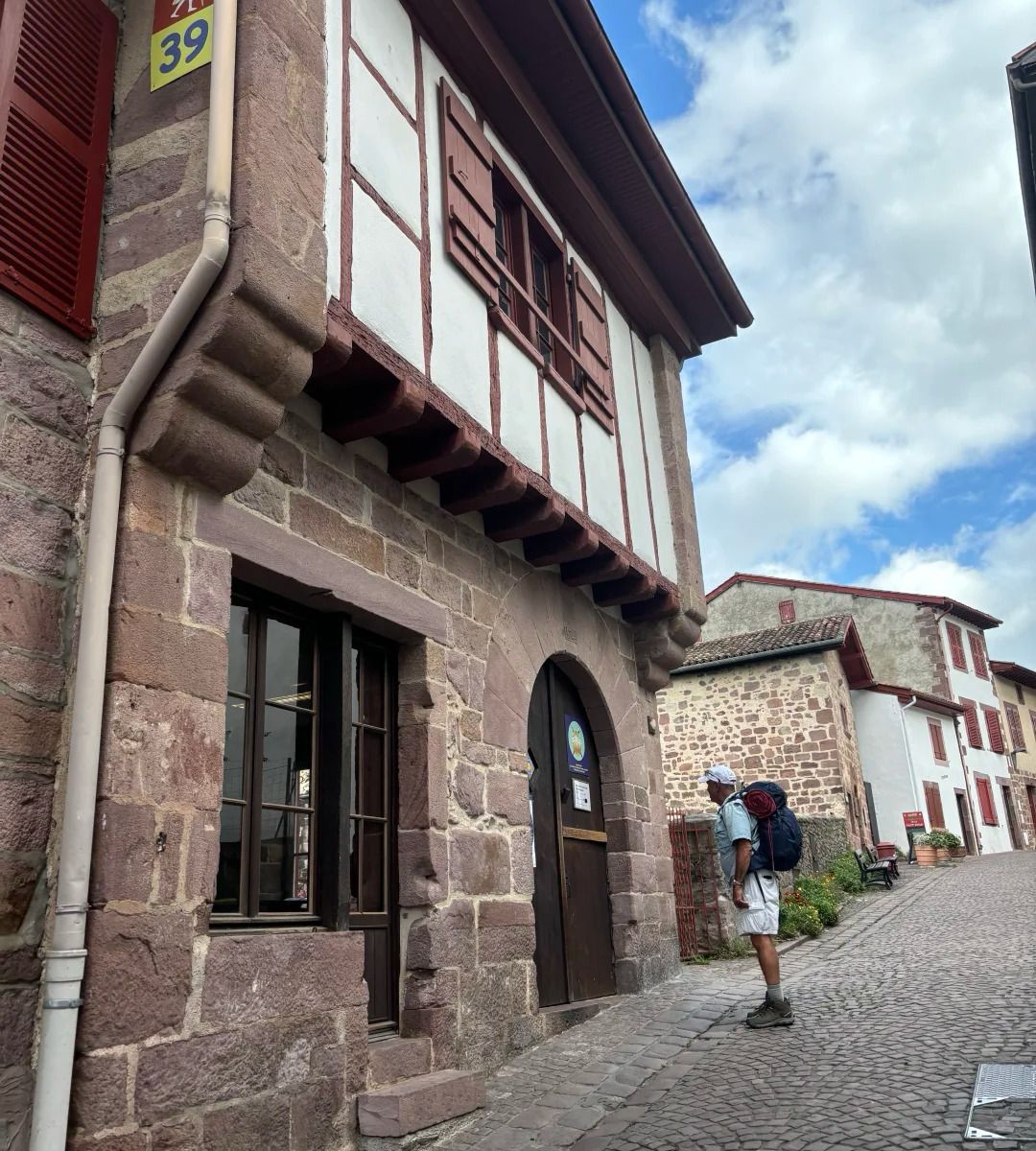
Free collection points include:
- Churches along any Santiago route
- Most public albergues (pilgrim hostels)
- Friends of the Camino associations (Asociación de Amigos del Camino)
For specific locations in Spain, check the official website at www.caminosantiago.org. You’ll need to show identification, and minors require adult accompaniment.
Important first Camino guide warning: Passports are always free. Avoid anyone trying to sell them – they’re likely counterfeit.
Understanding Your Passport Layout
The 14-page brown booklet features iconic Camino symbols on the cover. The first page requires basic information:
- Your name
- Start date
- Travel method: A pie (walking), En bicicleta (cycling), or A caballo (horseback)
Simply mark an “×” beside your chosen method.
The Stamp Collection Strategy for First Camino Guide Users
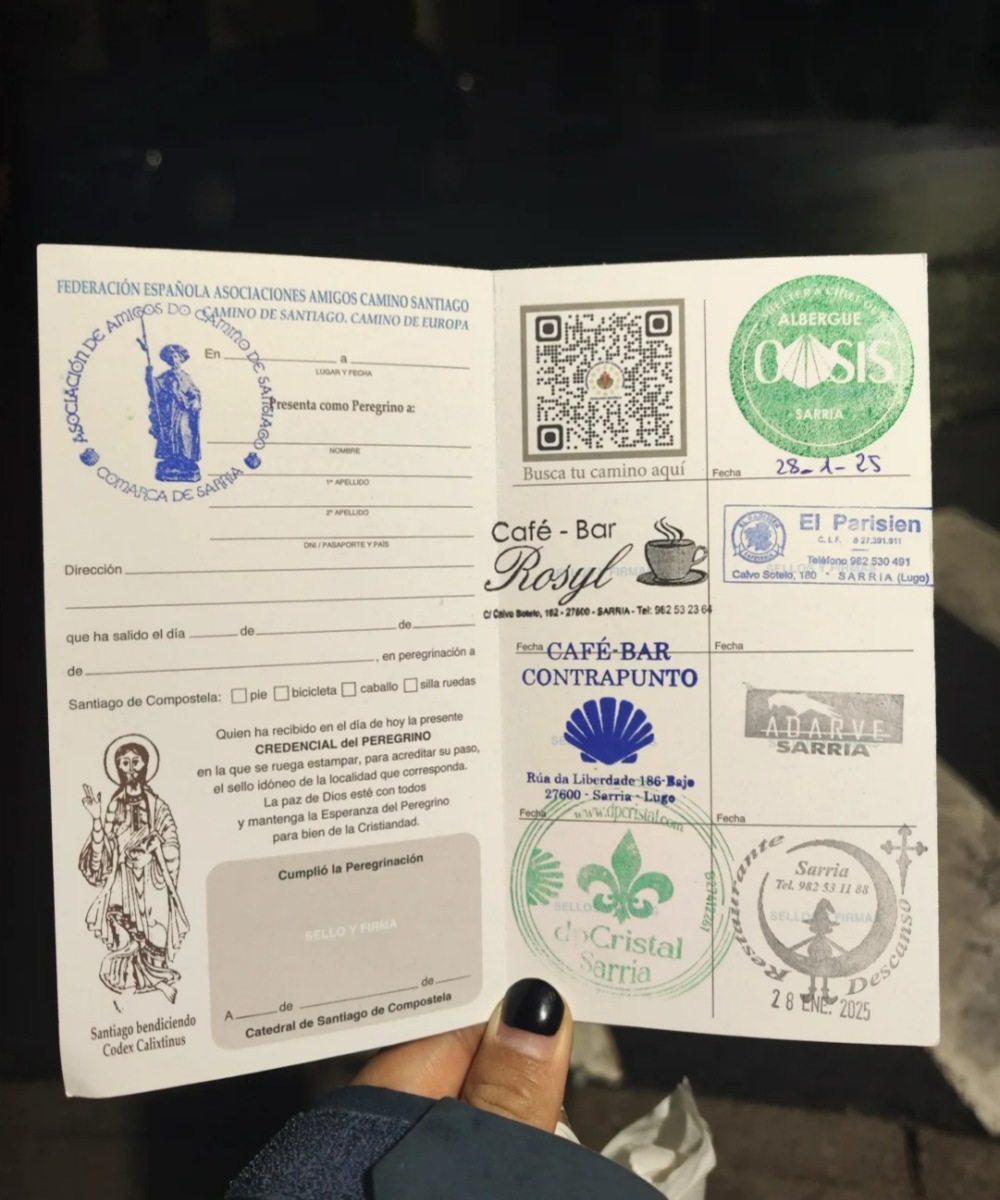
Interior pages contain grids for stamps (sellos) that document your journey. Each location offers unique stamps featuring their name and distinctive designs.
Where to collect stamps:
- Churches (large and small)
- Albergues (even if you don’t stay there)
- Cafés and restaurants along the route
- Municipal buildings and tourist offices
First Camino Guide Stamp Requirements
For walkers:
- Before final 100km: One stamp daily
- Final 100km (from Sarria): Two stamps daily
For cyclists:
- Final 200km (from Ponferrada): Two stamps daily
Pro tip for first Camino guide users: Popular routes like the French Way offer abundant stamping opportunities. Lesser-known routes require advance research to locate stamp points.
Continuing Beyond Santiago
Your passport remains useful for the Fisterra-Muxía extension, allowing continued stamp collection to the “end of the world.”
Flexibility for first-time pilgrims: The Camino doesn’t require continuous completion. You can break your journey into sections, resuming where you left off with fresh dates. If your passport fills up, simply collect another.
Santiago Certificates: Your First Camino Guide Achievements
The Compostela (La Compostelana)
Medieval pilgrims received scallop shells as proof of reaching Santiago. Today’s equivalent is the Compostela – a Latin document declaring that you completed your pilgrimage “out of devout faith” to Saint James’s tomb.
Eligibility requirements for first Camino guide users:
- Distance: Minimum 100km walking or 200km cycling/horseback
- Motivation: Religious faith or spiritual seeking (though this isn’t strictly enforced)
- Documentation: Complete stamped passport proving your journey
Cost: Completely free
Collection: Santiago Pilgrim Office staff fill in your name (Latin translation) and arrival date.
Distance Certificate (Certificado de Distancia)
Since 2014, this colorful certificate provides detailed journey statistics for €3. It records:
- Start and end dates
- Route taken
- Total distance completed
- Travel method used
Remote application: Email certificadodedistancia@catedraldesantiago.es if you missed collecting it in Santiago.
University Student Certificate (Compostelana Universitaria)
Created in 2002 by Universidad de Navarra and partner universities, this certificate encourages student participation in Santiago Ways.
Benefits for student first Camino guide users:
- Special student passport with university stamps
- Accommodation discounts
- Transportation savings
- Equipment purchase reductions
- Potential academic credit for pilgrimage reports
Eligibility: Complete any Spanish section of Santiago routes with proper documentation.
More information: Visit www.campus-stellae.org for participating universities and detailed requirements.
First Camino Guide Passport Tips
Practical Advice for Beginners
Protect your passport: Use plastic sleeves during rain. This document becomes irreplaceable after weeks of collecting stamps.
Backup documentation: Photograph each page regularly. If lost, photos help reconstruct your journey.
Stamp timing: Collect stamps when locations are open. Churches may have limited hours, while cafés offer more flexibility.
Language barrier: Most stamp locations understand “sello, por favor” (stamp, please). Point to your passport if language fails.
Common First Camino Guide Mistakes
Forgetting daily stamps: Missing stamps in the final 100km can disqualify you from certificates.
Wrong travel method: Ensure your marked method matches your actual travel. Switching requires new passport.
Insufficient stamps: Two daily stamps in the final section aren’t suggestions – they’re requirements.
Your pilgrim passport transforms from simple paperwork into treasured memoir as stamps accumulate. Each unique design tells the story of your Santiago Ways journey, creating an irreplaceable record of places, people, and moments that shaped your experience.
The certificates earned through this documentation process represent more than paper achievements – they’re recognition of personal transformation accomplished one step at a time across Spain’s ancient paths.
Ready to start your Santiago Ways adventure? Begin with our Santiago Ways introduction guide for essential route planning and preparation information.
