

Barcelona’s transport connections make getting to and from the city refreshingly straightforward, whether you’re flying in from across the globe or hopping over from another European city. Here’s everything first-time visitors need to know about navigating Barcelona’s transport options without the stress.
Flying to Barcelona: Your Airport Options
El Prat Airport (BCN) is your main gateway, sitting about 17km southwest of the city center. It’s modern, well-organized, and much more manageable than many European airport giants. The airport has two terminals – T1 handles most international flights including major airlines, while T2 serves budget carriers like Ryanair and EasyJet.
Beginner’s tip: Check which terminal your airline uses before your trip. T1 and T2 are connected by a free shuttle bus (15-minute ride), but you don’t want to discover you’re at the wrong terminal when you’re already stressed about catching your flight home.
Two smaller airports – Girona and Reus – serve some budget European routes, but unless you’re on a very specific budget airline deal, El Prat is almost certainly where you’ll land.
From El Prat Airport to City Center: Your Options
Aerobus: The Tourist Favorite (Recommended)
The big blue Aerobus is what most first-timers choose, and for good reason. It’s reliable, frequent, and drops you right in the heart of Barcelona at Plaça Catalunya.
2025 prices: €7.45 one-way, €12.85 return (valid for 90 days) Journey time: 35 minutes Frequency: Every 5-10 minutes from 5:00 AM to midnight
Both A1 (from T1) and A2 (from T2) buses follow the same route through the city, stopping at Plaça Espanya, Gran Via-Urgell, and Plaça Universitat before reaching Plaça Catalunya. The buses are clean, air-conditioned, and have space for luggage.
Why beginners love it: No confusing transfers, English announcements, and the final stop puts you at Barcelona’s main transport hub where you can easily catch metro, bus, or taxi to your accommodation.
Metro L9: The Budget Option
Barcelona’s L9 Sud metro line connects both terminals directly to the city’s metro network. It’s newer and fully automated, but requires a transfer to reach central Barcelona.
2025 prices: €5.70 one-way (special airport ticket required) Journey time: 30-50 minutes depending on destination Frequency: Every 7 minutes
The catch for first-timers: You can’t use regular Barcelona transport cards for airport stations, and you’ll likely need to transfer to reach your final destination. If you’re staying central, the Aerobus is usually more convenient.
R2 Train: The Speed Demon
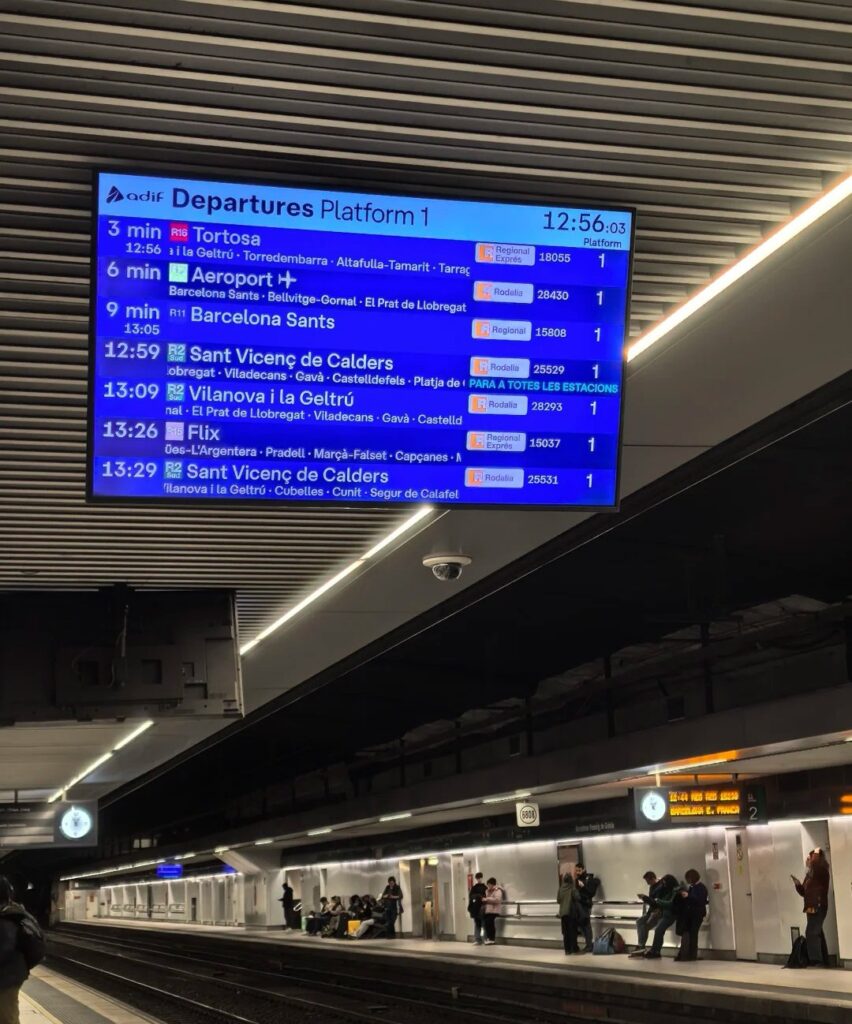
The R2 Nord train offers the fastest connection to specific parts of Barcelona, running from Terminal 2 to major stations including Barcelona Sants and Passeig de Gràcia.
2025 prices: €4.90 one-way Journey time: 19 minutes to Sants, 26 minutes to Passeig de Gràcia Frequency: Every 30 minutes
Perfect for: Travelers staying near major train stations or those continuing to other Spanish cities from Sants station.
Regular Bus: The Ultra-Budget Choice
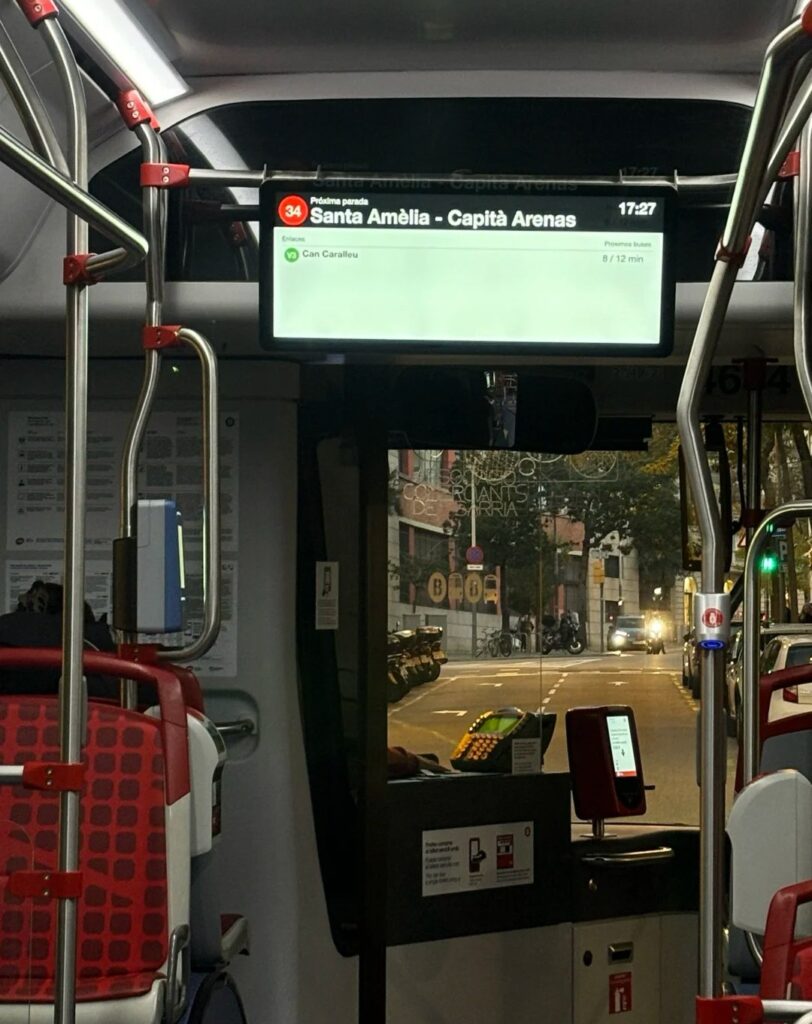
Bus 46 runs from both terminals to Plaça Espanya during the day, with night buses N17 and N18 covering overnight hours.
2025 prices: €2.55 one-way Journey time: 40-45 minutes Why most skip it: Limited luggage space and slower than other options. Only worth considering if you’re on an extremely tight budget.
Taxi: The Comfort Option
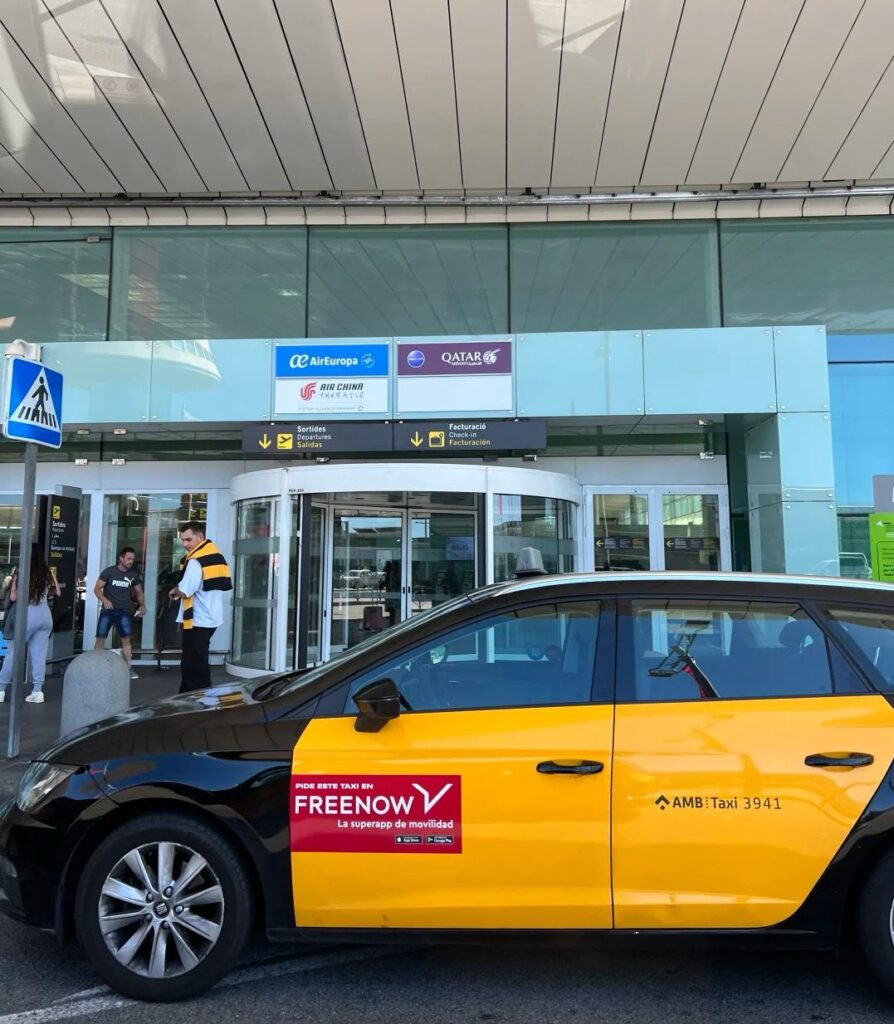
Barcelona’s distinctive black-and-yellow taxis are always available outside both terminals. They’re regulated and reliable, though not cheap.
2025 prices: €35-40 to city center (minimum €21 charge, plus €4.50 airport surcharge) Journey time: 25-35 minutes depending on traffic When it’s worth it: Late arrivals, lots of luggage, or traveling with a group where costs can be split.
Getting Around Spain by Train
Barcelona’s train network connects you to the rest of Spain and beyond, though the experience varies dramatically depending on your destination.
High-Speed AVE Trains
Spain’s high-speed trains are impressive – comfortable, punctual, and surprisingly fast. The catch? They’re often more expensive than flying, especially for popular routes like Barcelona to Madrid.
Money-saving tip: If you’re traveling in a group of 4 or 8, look for MESA tickets (shared table seating) which can cut costs nearly in half. Also check online for advance booking discounts.
International connections: The high-speed train to Paris takes 6 hours 19 minutes and starts from €59 – a scenic alternative to flying that lets you watch the Spanish countryside transform into French farmland.
Main Train Stations
Barcelona Sants handles most long-distance services, including AVE trains and international connections. It’s well-connected to the metro and has all the amenities you’d expect from a major station.
Estació França now mainly serves regional trains within Catalonia, having lost most of its international services to Sants.
Booking tip for international visitors: Spanish rail booking websites often reject foreign credit cards. If you’re planning train travel, consider booking through third-party sites or buying tickets in person at the station.
Long-Distance Buses: Europe on a Budget
Estació de Nord is Barcelona’s main bus terminal, offering connections throughout Spain and to major European cities. It’s an affordable way to travel, though obviously much slower than flying or high-speed rail.
The station connects to Barcelona’s transport network via metro (Arc de Triomf on Line 1) and several bus routes. Most operators allow online booking, and you can usually buy return tickets for better value.
Ferry Adventures: The Mediterranean Beckons
Barcelona’s port is one of the Mediterranean’s busiest, with regular ferries to the Balearic Islands (Mallorca, Menorca, Ibiza) and longer routes to Italy and North Africa.
Getting to the Port
The port spans three main areas, all accessible via metro Line 3 to Drassanes station:
World Trade Centre: Mainly Balearic Island ferries Adossat: International cruise ships Old Port: Smaller vessels and local services
Port buses: Special T3 Portbus services (€2 one-way, €3 return) connect Drassanes metro station to the cruise terminals, running every 30 minutes based on ship schedules.
Popular Ferry Routes
Balearic Islands: Daily services to Mallorca, Menorca, and Ibiza operated by Acciona Transmediterranea and Balearia Italy: Connections to Livorno, Civitavecchia, and Genoa North Africa: Routes to Tangier and other Moroccan ports
Smart Transport Tips for First-Timers
Save money with transport passes: If you’re using public transport during your stay, consider the Hola Barcelona Travel Card (2-5 days), which includes airport metro access and unlimited city transport.
Download apps: The official TMB app covers Barcelona’s metro and buses, while FreeNow and Cabify offer taxi alternatives.
Avoid peak hours: Barcelona’s rush hours (8-9 AM and 6-8 PM) can significantly slow your journey, especially by road.
Keep tickets: Transport inspectors are common, and fines for traveling without valid tickets are hefty.
Barcelona’s transport system rewards a bit of advance planning but forgives beginners’ mistakes. Whether you choose the tourist-friendly Aerobus or dive straight into the metro system, you’ll find getting around this Mediterranean gem much easier than you might expect.
