
Walking the Santiago Ways without understanding the symbols is like reading a book missing half its pages. After four different Camino routes, I’ve learned that recognizing these ancient signs transforms random walking into meaningful pilgrimage. Each symbol tells centuries of stories and connects you to millions of pilgrims who walked before you.
For complete background on Santiago Ways routes and essential preparation, check our Santiago Ways introduction guide covering all fundamental planning information.
The Pilgrim Scallop Shell (Concha del Peregrino): Your First Camino Guide Badge
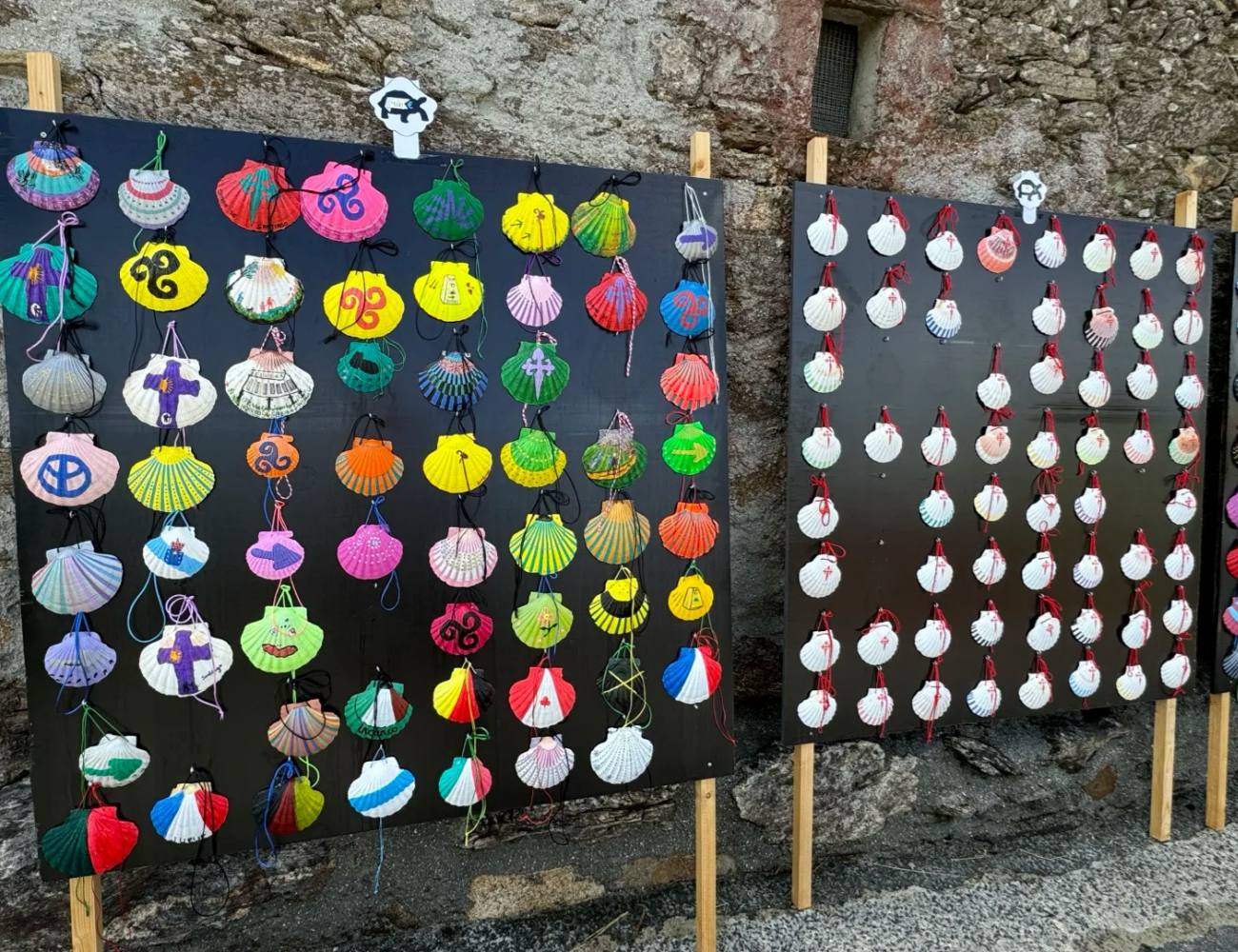
The scallop shell dangling from backpacks and walking sticks represents the most iconic first Camino guide symbol. Legend tells that when Saint James’s body arrived on Galician shores, it was covered in these local shells, making them the eternal pilgrim emblem.
Historical Significance for First Camino Guide Users
Medieval pilgrims wore shells on clothes or hats during their return journey, proving they’d completed Santiago. They also used shells as drinking cups from streams and rivers – practical and symbolic combined.
Modern Shell Traditions
Today’s first Camino guide followers can purchase shell pendants at shops along any route. Many feature the distinctive red Santiago cross painted on white shell surfaces. The tradition continues at journey’s end – countless pilgrims collect natural shells from Finisterre beaches as perfect souvenirs.
First Camino guide tip: Attach your shell to your backpack’s exterior. It identifies you as a pilgrim and often leads to wonderful conversations with locals and fellow walkers.
The Pilgrim Gourd (Calabaza del Peregrino): Ancient Water Vessel
This distinctive bottle-shaped gourd completes the classic pilgrim silhouette depicted in medieval art and modern Camino imagery. Originally serving as lightweight, inexpensive water containers, gourds now function primarily as decorative symbols.
Why first Camino guide users should know this: Understanding traditional pilgrim items helps you appreciate the deep historical continuity you’re joining. Every modern pilgrim carries water – medieval pilgrims used gourds.
The Pilgrim Staff (Bastón): Your Medieval Walking Companion
The wooden walking stick represents more than support equipment – it’s a symbol connecting modern first Camino guide users to medieval pilgrimage traditions. Beyond helping with difficult terrain, staffs served defensive purposes against wild dogs and bandits.
Traditional Staff Decorations
Shells and gourds were traditionally tied to staff tops, creating the complete pilgrim image preserved in countless artistic depictions. Today’s trekking poles serve the same practical function while honoring ancient traditions.
Finding your staff: If starting the French Way from Saint-Jean-Pied-de-Port, traditional wooden staffs can be found or carved in Pyrenean forests. Many pilgrims consider this an essential first Camino guide ritual.
Yellow Arrow Waymarkers (Flecha Amarilla): Your Path to Santiago
These simple yellow arrows painted on stones, trees, walls, and signposts represent the modern pilgrim’s most essential navigation tool. The arrow design echoes scallop shell radiating lines, symbolizing “all roads lead to Santiago.”
Following Yellow Arrows: First Camino Guide Navigation
Where you’ll find them:
- Stone waymarkers and monuments
- Building walls and fence posts
- Trees and utility poles
- Road signs and official markers
Arrow variations: While yellow dominates, some routes use red arrows or different colors. The French Way features the most frequent arrow placement – you’re never far from the next directional guide.
First Camino guide mistake to avoid: Don’t rely solely on GPS or apps. Learning to spot and follow yellow arrows connects you to the traditional pilgrimage experience and works when technology fails.
Santiago Cross (Cruz de Santiago): The Sword-Shaped Symbol
This distinctive cross resembles a sword with fleur-de-lis decorations, representing Saint James’s martyrdom (he was beheaded by sword) and his steadfast character. The design originated during Crusade periods when soldiers carried crosses that could be planted in ground for prayer.
Where First Camino Guide Users Encounter Santiago Crosses
Common locations:
- Church facades and interiors
- Pilgrim accommodation signage
- Souvenir shops and merchandise
- Food items (notably Tarta de Santiago cake)
- Official certificates and documents
Cultural significance: The sword-cross connects Saint James’s dual role as apostle and legendary warrior saint (“Santiago Matamoros” – Saint James the Moor-slayer in Spanish reconquest mythology).
Reading the Sacred Landscape: First Camino Guide Symbol Integration
Understanding these symbols transforms your first Camino guide experience from simple hiking to cultural pilgrimage. Each shell worn by fellow pilgrims represents shared commitment. Every yellow arrow continues centuries of wayfinding tradition. Santiago crosses remind you of the spiritual journey’s ultimate destination.
Symbol Etiquette for First-Time Pilgrims
Respectful practices:
- Don’t remove shells, arrows, or markers from their locations
- Purchase authentic shells rather than plastic imitations
- Understand that symbols have religious significance for many pilgrims
- Share symbol meanings with fellow first Camino guide users you meet
Collecting Symbol Memories
Appropriate souvenirs:
- Shells collected from Finisterre beaches
- Santiago cross jewelry or pendants
- Photographs of unique arrow art or unusual waymarkers
- Replicas of traditional gourds or staffs
The sacred symbols of Santiago Ways create visual language spanning centuries and cultures. Whether you’re walking for spiritual reasons, cultural interest, or personal challenge, these symbols connect your modern first Camino guide journey to an unbroken chain of pilgrims stretching back over 1,000 years.
Every yellow arrow points toward the same destination, every scallop shell represents the same achievement, and every Santiago cross honors the same saint. In understanding these symbols, first-time pilgrims join not just a walking route, but a living tradition that transforms simple steps into sacred journey.
Ready to start your Santiago Ways adventure? Begin with our Santiago Ways introduction guide for essential route planning and preparation information.
